


|
Quantity
|
Out of stock
|
||
|
|
|||
|
|
|||
| Model | Capacity (l) | productivity (l/s) | Dimensions LxWxH (mm) |
| fTrap 36 | 36 | 0,1 | 450×340×355 |
| fTrap 60 | 60 | 0,1 | 500×400×400 |
| fTrap 120 | 120 | 0,2 | 650×500×500 |
| fTrap 240 | 240 | 0,4 | 800×700×570 |
| fTrap 300 | 300 | 0,5 | 1000×700×570 |
| fTrap 500 | 500 | 1 | 1200×800×700 |
| fTrap 1000 | 1000 | 2 | 1500×1000×900 |
| fTrap 1500 | 1500 | 3 | 1500×1300×1000 |
| fTrap 2000 | 2000 | 4 | 1500×1500×1200 |
Grease traps
Industrial and household
A grease trap is installed to trap grease, oil, fatty acids and other light organic materials
that can contaminate sewer pipes and harm the environment.
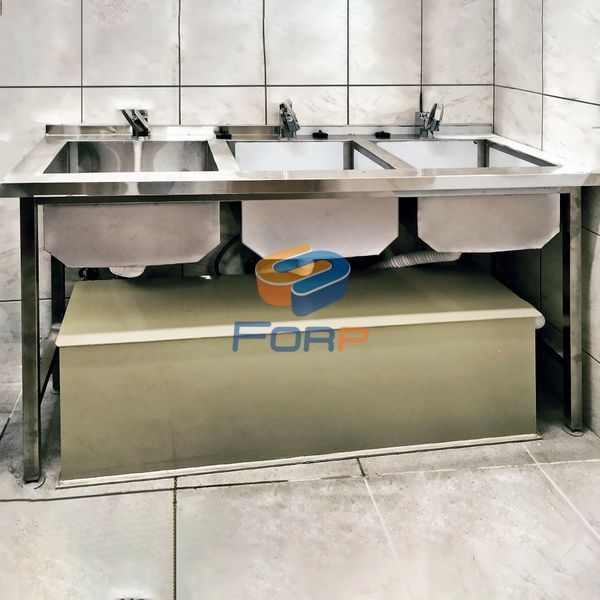
Such a device is especially important for catering establishments, where a large
amount of fatty substances can enter the sewer.

The principle of operation of the grease trap is because the runoff from kitchen waste first enters a special tank,
where the heavy parts (which contain fat) are separated from the liquid. The heavy parts settle to the bottom, f
orming a layer of fat, while the water is carried away through the sewage system
About grease traps:
The grease trap is designed to catch oils and fats that enter the drains during food processing to prevent clogging of the sewage system.
When fat gets into the drain, it causes problems, both mechanical - clogging of the sewer, and hygienic - the presence of an unpleasant smell. In addition, the presence of oils, fats and starches in wastewater worsens the sedimentation properties of sludge.
Sewage from toilets and bathrooms cannot be dumped into grease traps.
Advantages of the grease trap:
- simple assembly of component parts, made on the site of a specific object;
- the use of polypropylene material makes it resistant to acids and aggressive liquids;
- simple principle of action;
- very light in weight;
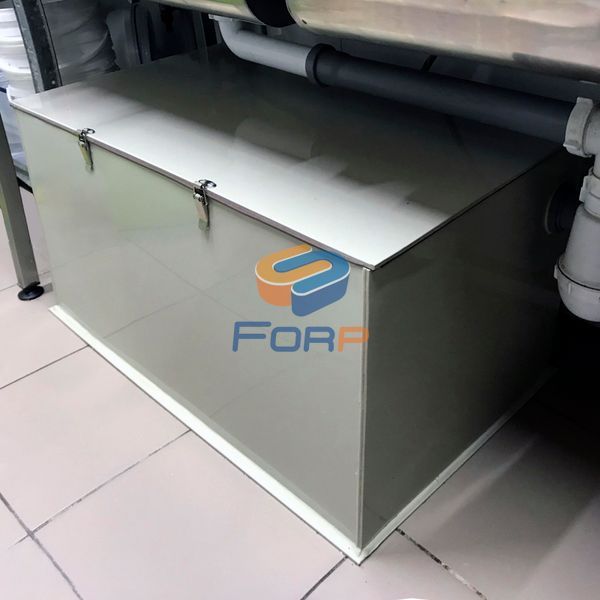
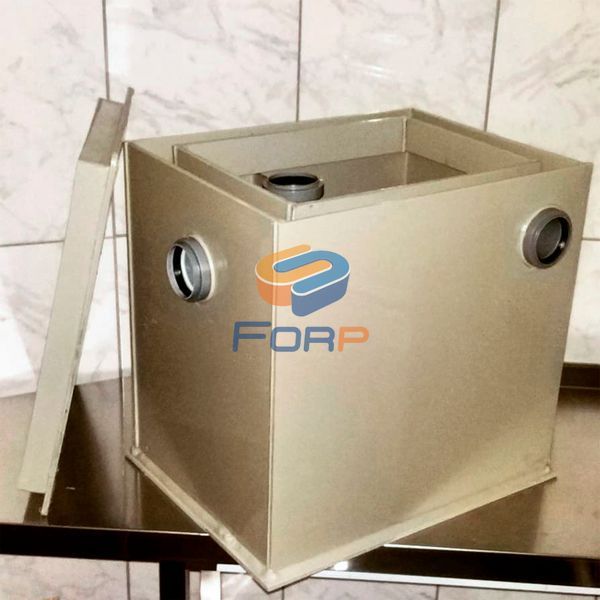
- equipped with a cover, which makes it possible to avoid the presence of unpleasant odors.
Description:
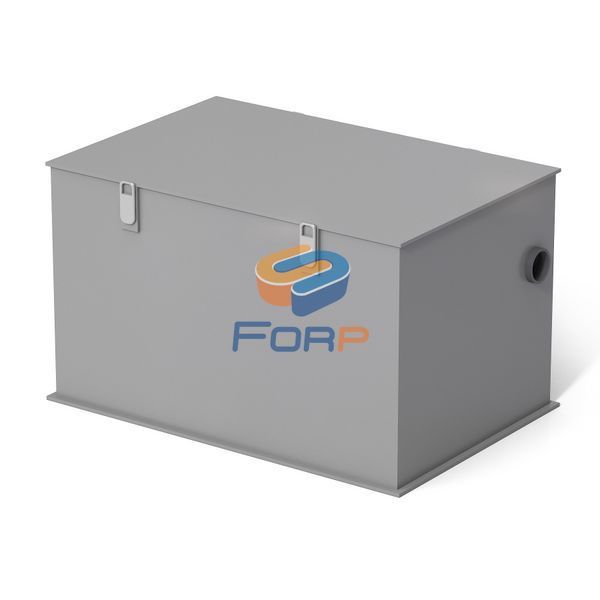
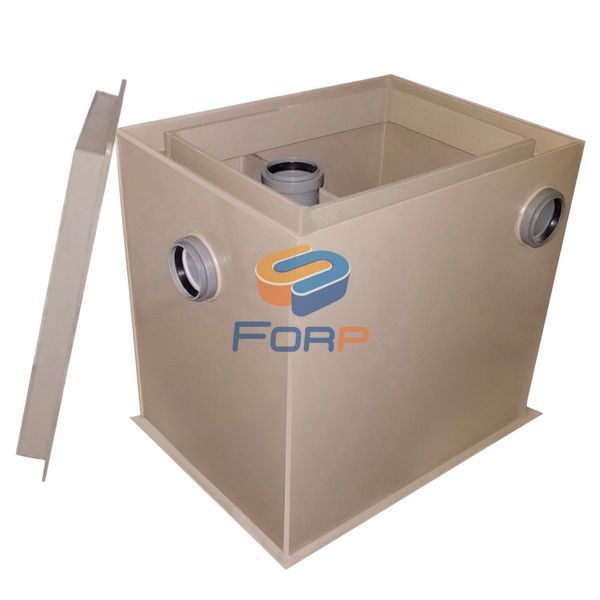
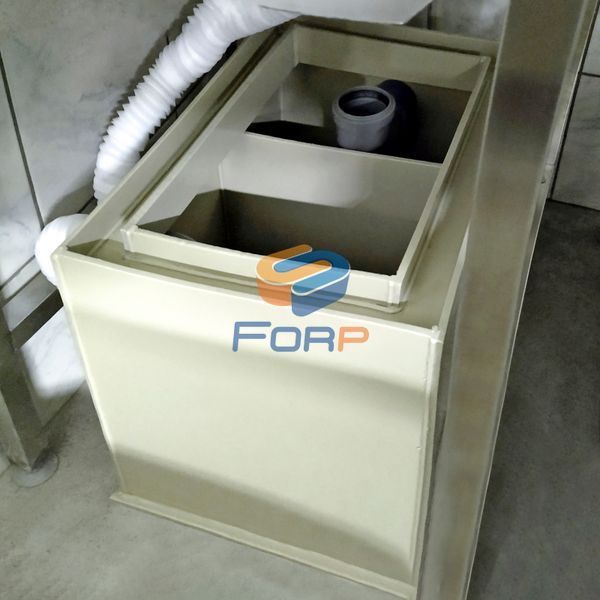
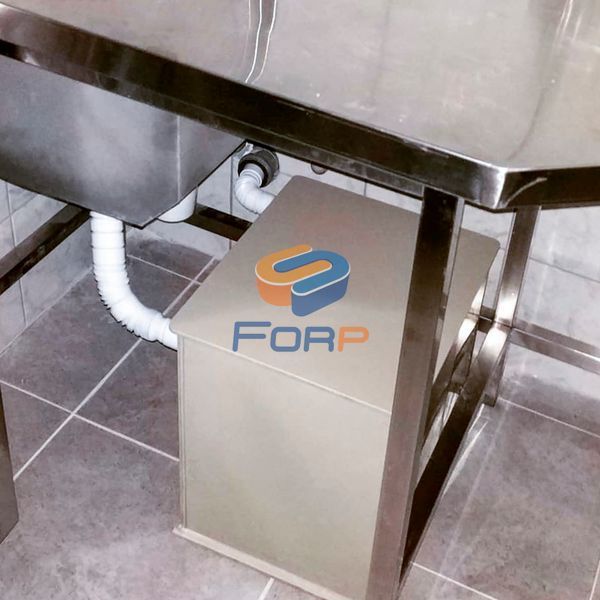
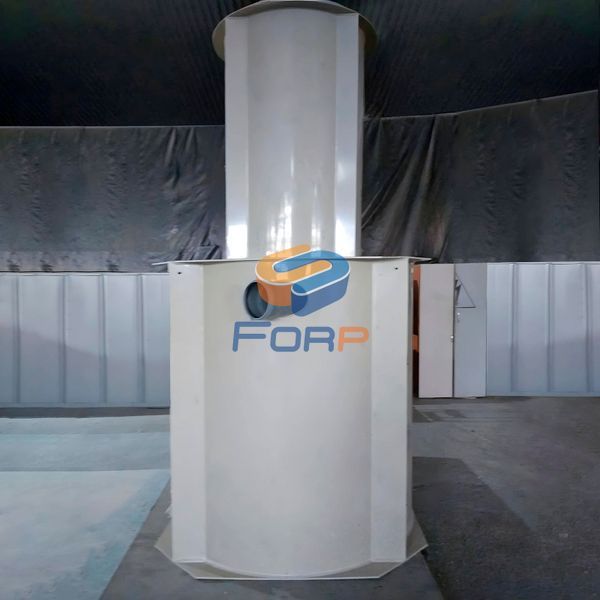
The fat separator has a rectangular or cylindrical shape. Inside, the grease trap is divided by special partitions that form several technological compartments.
The principle of operation of the grease trap is the following debugged process:
First, by gravity, the effluents together with the fats enter the first compartment of the grease trap - it is here that various suspended substances settle to the bottom, after which all the already separated fats float to the surface according to the principle of gravity
Next, the waste water purified from fats and suspended substances enters the second compartment of the grease trap - here the separation of fats also takes place, and only after this stage all waste water is discharged into the sewage system. Several layers of fat accumulate in the fat storage.
After the fats have been here for some time, they are removed from the grease trap. Thanks to the special design of the grease trap and its cover, odors do not penetrate outside.
Types:
- self-supporting (for concreting);
- non-self-supporting; industrial; household.
Scope:
- restaurants;
- cafe;
- bars;
- kitchens of catering establishments;
- departments of semi-finished products;
- meat and dairy industry;
- canneries;
- fish processing plants;
- meat markets, slaughterhouses, processing shops;
- oil mills.